In short
A door that jumped its track or has a loose cable is unsafe to run. Leave it where it is and call. In Princeton, a technician secures the door, fixes the cables and rollers, and lines the track up with the opening.
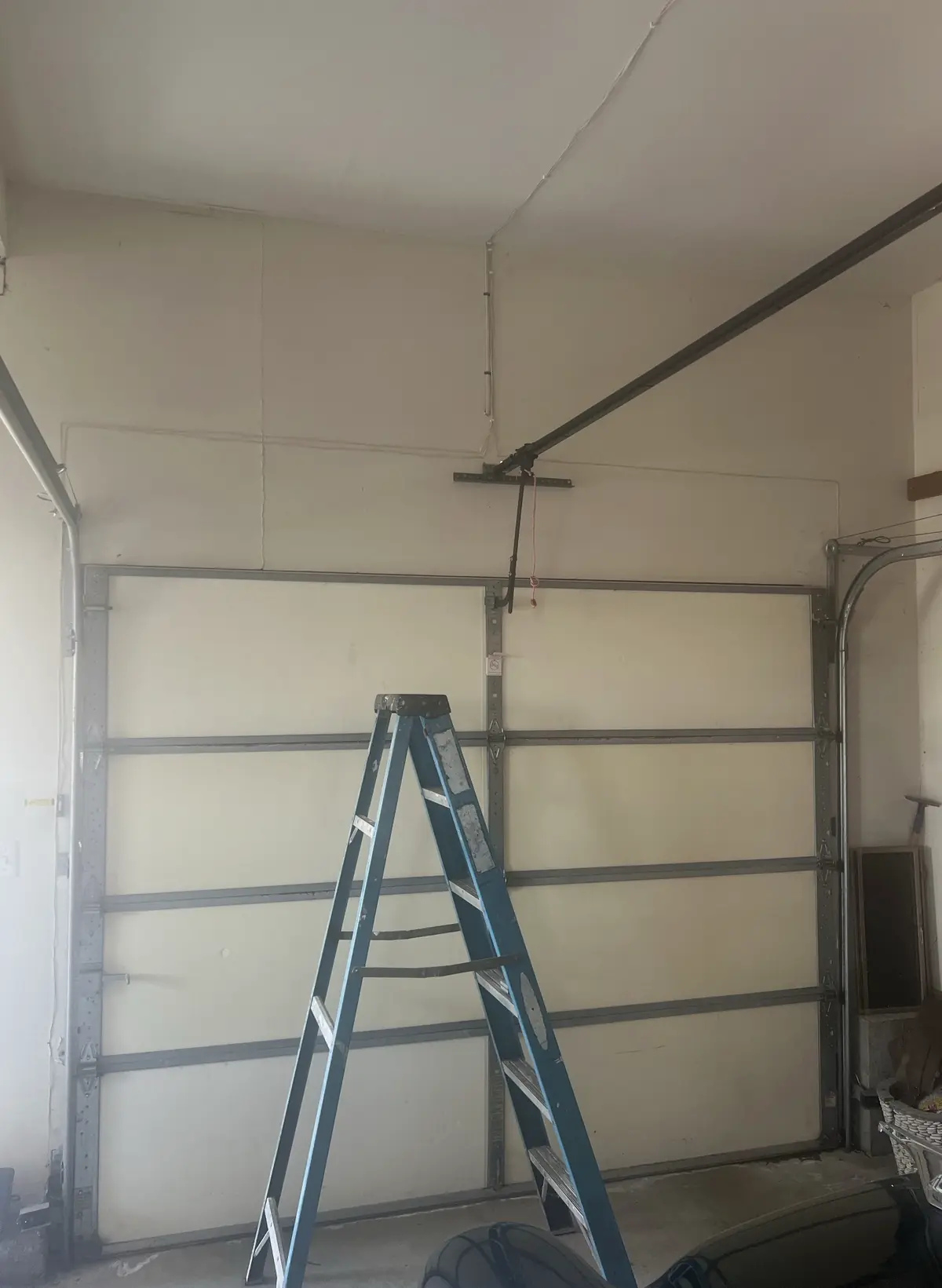
Track problems in Princeton
Alley garages near the Tree Streets are tight to approach, and a mis-judged turn bends the track or the bottom panel. Older frames there are seldom square to begin with.
Wooded lots on the Ridge shed debris that ends up in the rails. Whatever the cause, the door is made safe, damaged track replaced, rollers renewed and the balance tested.
Common causes
- Impact: a backed-in car or a bicycle leaned against the door.
- Cable failure: one side drops when a cable breaks or unspools.
- Worn rollers: cracked or flat rollers ride out of the track.
- Loose track: brackets work loose and the track bends or spreads.
Until it's fixed
Stop using the door and disconnect the opener. A door that's partly out of its track is held up by tension and luck, so don't stand under it or try to force it back in yourself.
Typical parts that get replaced
- Lift cables, which fray and snap with age.
- Nylon or steel rollers with flat spots or broken stems.
- Hinges that have cracked where the panels flex.
- Track sections bent by a bumper, plus any bracket that has pulled loose from the wall.
Before leaving, the technician balances the door so it stays put halfway up and checks that it reverses when it meets an obstruction.
Around Princeton
- Tree Streets and Witherspoon-Jackson: Older in-town blocks with small garages.
- Princeton Ridge: Wooded northern section with newer, larger homes.
See the full Princeton service area.
Questions we hear in Princeton
We're in a historic district. Do we need approval for a new door?
Possibly. The town's historic preservation office can confirm; the door is quoted to whatever is approved.